Quick Tips to Keep Your Jeep Trail-Ready
October 11 2024 - support@wikimotive.com
 From sheer rock faces and sand dunes to deep muddy pits and fast-moving streams, Jeep's lineup of off-road models is designed to withstand some of the most difficult terrain under the sun. With its iconic 4WD system, ample ground clearance, and open-air design, the Wrangler is the obvious MVP of the Jeep lineup when it comes to all-terrain adventure, but the Gladiator pickup, Cherokee Trailhawk, and Renegade Trailhawk aren't far behind, combining on-road practicality with the sort of capability that's made Jeep such a force to be reckoned with in the off-road segment.
Many of these models are ready to head straight from our dealership here at Gastonia Chrysler Dodge Jeep Ram, your local Jeep dealer near Fort Mill, to the nearest off-road trail, but what happens after that maiden voyage will really dictate what sort of performance your SUV or pickup can offer in the long term. There are few activities quite as demanding as off-roading, but by following a few simple tips and embracing some best practices, it's easy to maintain a Jeep trail-ready. Read on as we discuss some common maintenance tasks that should be part of every post-ride routine and learn how, with a little time and attention, you can keep your Jeep primed for any adventure the road might throw at you.
From sheer rock faces and sand dunes to deep muddy pits and fast-moving streams, Jeep's lineup of off-road models is designed to withstand some of the most difficult terrain under the sun. With its iconic 4WD system, ample ground clearance, and open-air design, the Wrangler is the obvious MVP of the Jeep lineup when it comes to all-terrain adventure, but the Gladiator pickup, Cherokee Trailhawk, and Renegade Trailhawk aren't far behind, combining on-road practicality with the sort of capability that's made Jeep such a force to be reckoned with in the off-road segment.
Many of these models are ready to head straight from our dealership here at Gastonia Chrysler Dodge Jeep Ram, your local Jeep dealer near Fort Mill, to the nearest off-road trail, but what happens after that maiden voyage will really dictate what sort of performance your SUV or pickup can offer in the long term. There are few activities quite as demanding as off-roading, but by following a few simple tips and embracing some best practices, it's easy to maintain a Jeep trail-ready. Read on as we discuss some common maintenance tasks that should be part of every post-ride routine and learn how, with a little time and attention, you can keep your Jeep primed for any adventure the road might throw at you.
Replace the Air Filter
Kicking up a little dust is par for the course on any off-road adventure, but it can also present some real problems when it comes to your air filter. In order to work its best, a Jeep's engine needs a steady supply of clean, oxygen-rich air. The air filter plays a vital role in providing this fresh air, as well as keeping dust, dirt, and other contaminants from finding their way into some of the vehicle's most sensitive components. Under normal circumstances, an air filter can usually last 20,000 and 30,000 miles between replacements, but that schedule might need to be accelerated if you're a regular off-roader. In these conditions, swapping out your engine air filter every 10,000 to 12,000 miles can offer some real benefits in terms of performance, efficiency, and emissions.Inspect and Maintain Tires
A Jeep's tires take a lot of abuse when navigating tough off-road conditions. From sharp obstacles and deep ruts to rock crawling and the wear-and-tear that's an inevitable part of any journey, there is no shortage of factors that can impact the performance and longevity of your tires. That is why inspecting and servicing your tires is such an important part of any off-road maintenance routine. These tasks generally fall into three categories: tire alignment, rotation, and pressure. Let's take a brief look at each and see how a little TLC can help to ensure off-road success.Alignment
Technically speaking, tire alignment is more about the suspension than the tires themselves. As you bash through your favorite off-road trails, your Jeep's suspension is bound to get thrown out of whack, but a tire alignment can certainly help to straighten things out. This common maintenance task involves adjusting the angle of the wheels in order to provide solid contact with the road and should be performed every 20,000 miles under normal conditions. Those who enjoy a little off-the-grid fun should consider having a tire alignment performed every 10,000 to 15,000 miles or schedule an immediate appointment with Gastonia Chrysler Dodge Jeep Ram if they notice that the vehicle is starting to pull to the left or right.Rotation
Tires don't wear out at an even rate, especially when subjected to the rigors of off-roading. A vehicle's front tires tend to wear down a little quicker than the back tires, thanks to the fact that they're under more pressure on their outside edges every time you make a turn. Jeep's Command-Trac, Rock-Trac, Quadra-Drive, and Quadra-Trac 4WD systems provide a lot of off-road ability, but they can also lead to accelerated wear as power is being funneled to all four wheels. If you want to enjoy consistent performance and prolong the life of your tires, Jeep recommends performing a rotation every six months or 6,000 to 9,000 miles.Pressure
When you're driving on paved roads, maintaining proper tire pressure is one of the easiest ways to improve fuel economy and reduce the risk of a mid-ride blowout. That said, there are occasions when running your tires a little low can offer some real advantages. Reducing your Jeep's tire pressure by 25 to 35 percent can drastically improve traction on dirt and sheer rock surfaces, while those clawing through sandy desert terrain might air down by as much as 50 percent. Letting a little air out creates a wider contact patch and, in the case of sand and snow, can allow a vehicle to glide over a surface that it might otherwise become mired in. Once you're back in the world of asphalt and stop lights, it's important to quickly get your tires back up to the proper air pressure. Running your Jeep on deflated tires, especially at higher speeds, can cause irreparable damage to the tires themselves and even increase the risk of blowouts as you're headed for a night on the town. While performing an alignment or tire rotation can be a little intimidating, every driver knows their way around a tire pressure gauge. Newer Jeep models even include an integrated tire pressure monitoring system (TPMS) that will automatically display each tire's current pressure directly on the digital gauge cluster.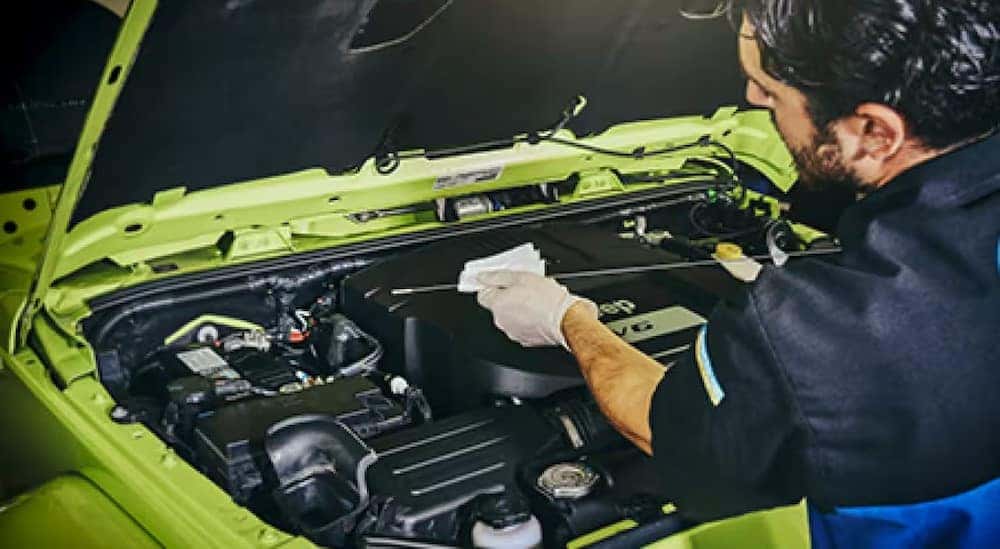
Post-Ride Wash
There's nothing like a muddy Jeep to show other drivers you know how to have a good time behind the wheel, but that messy badge of honor should only last as long as it takes you to get from the trail to your own driveway or a car wash. The dirt, dust, rocks, and water that find their way into the wheel wells and the deeper recesses of your undercarriage can wreak havoc on some important components and should always be addressed as soon as possible. A mud-caked tire or radiator can lead to an unbalanced ride or a Jeep that runs as hot as a Carolina Reaper, while dirt, salt, and water can accelerate the development of every undercarriage's worst enemy: rust. Hitting your Jeep with a high-pressure hose after a long day on the trail is just as important as your own post-ride shower and should never be treated as an afterthought.Check Fluids
Every driver knows the importance of performing regular oil changes every 3,000 miles, but engine oil isn't the only fluid you need to be concerned with if you gravitate towards the off-road lifestyle. The more time you spend bouncing down a trail or fording water, the more likely you are to puncture or flood an important component. A post-ride check of all your fluids, including oil, transmission fluid, power steering fluid, brake fluid, and coolant, can help prevent the worst-case scenarios that could lead to an expensive repair if not outright failure.Brake Pads
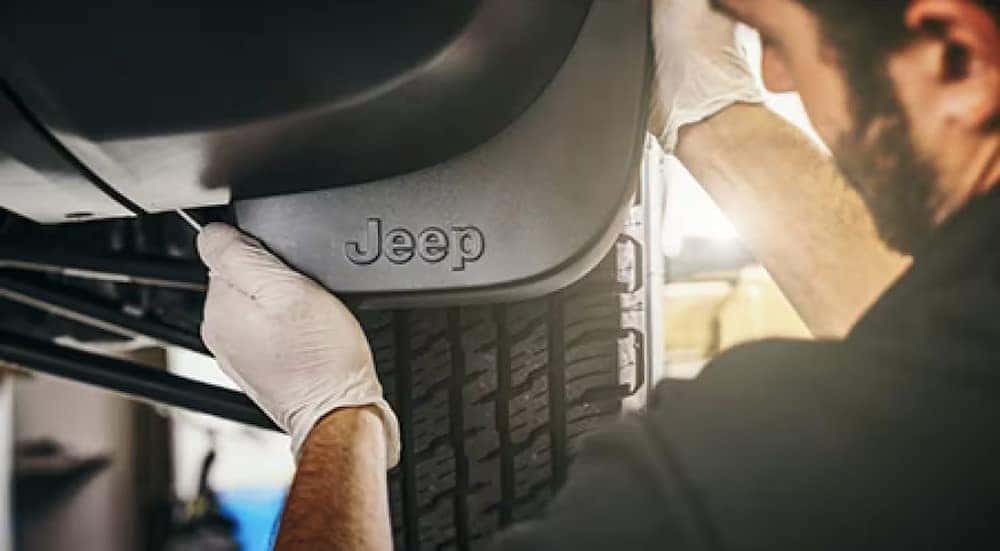
The ability to bring your Jeep to a quick stop can mean the difference between a near-miss and a costly off-road accident. Swapping out your Jeep's brake pads every 10,000 to 20,000 miles and your brake rotors every 50,000 to 70,000 miles are two projects that should never be neglected, but those aren't the only brake-related maintenance tasks to remember. As you conquer your local off-road trials, dirt, sand, rocks, and other contaminants can wedge their way between your pads and rotors or, in the case of Wrangler's produced through 2007, your drum brakes. That's why a quick brake inspection check should be a part of every driver's post-ride checklist. Keep an eye out for any small rocks or debris that might be caught between the pads and rotors, or listen for a high-pitched screeching sound as you drive. These can usually be worked out using a small flathead screwdriver, though in some cases, you might need to call in the pros for a more thorough fix.Check Differentials, Transmission, Suspension, and Frame
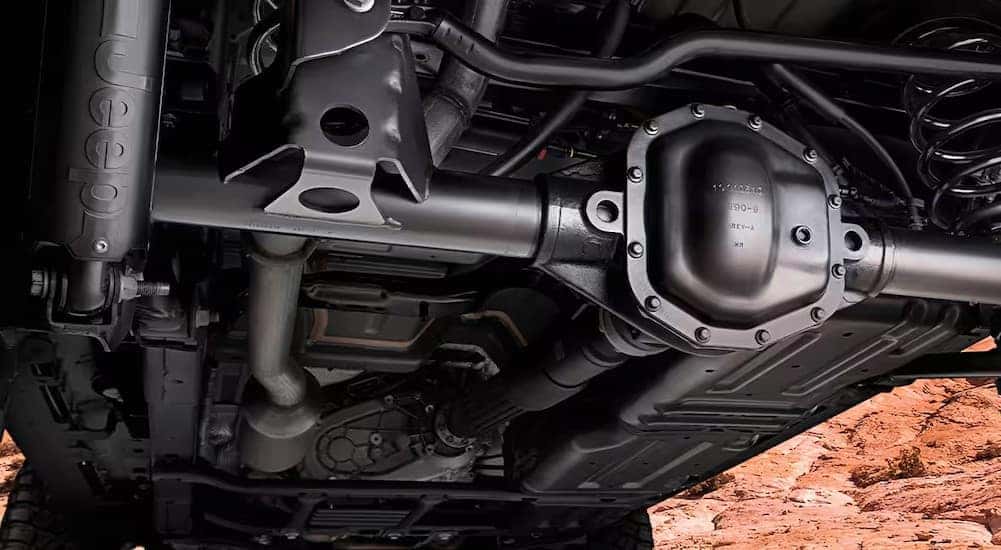
There are few automotive activities that put quite as much strain on a vehicle as off-roading. While a Jeep's differentials, transmission, suspension, and frame are designed to excel in even the most challenging conditions, they're still susceptible to the laws of physics. As such, it's important to give your Jeep a meticulous once-over every time you get off the trail. Dents, cracks and punctures, dripping fluids, loose nuts and bolts, excessive wear, and warping can all be a cause for concern and potentially lead to catastrophic breakdowns. Familiarizing yourself with the location of critical underbody components and crawling under your Jeep with a flashlight might not be an exciting afternoon, but it's a small price to pay to ensure your Jeep's longevity.Grease It Up
Lubrication is vital for any hard-working machine, and your Jeep is no exception. Applying a little grease to some strategic areas can help to prevent water, dirt, and grit from working their way into areas where they're not welcomed, including the driveshaft, bearings, and U-joints. Automotive grease can also help to reduce friction, keeping everything running nice and smoothly and preventing unwanted squeaks and squeals. Experts recommend applying a healthy dose of grease during each oil change, but frequent off-roading might necessitate an extra application between oil changes.