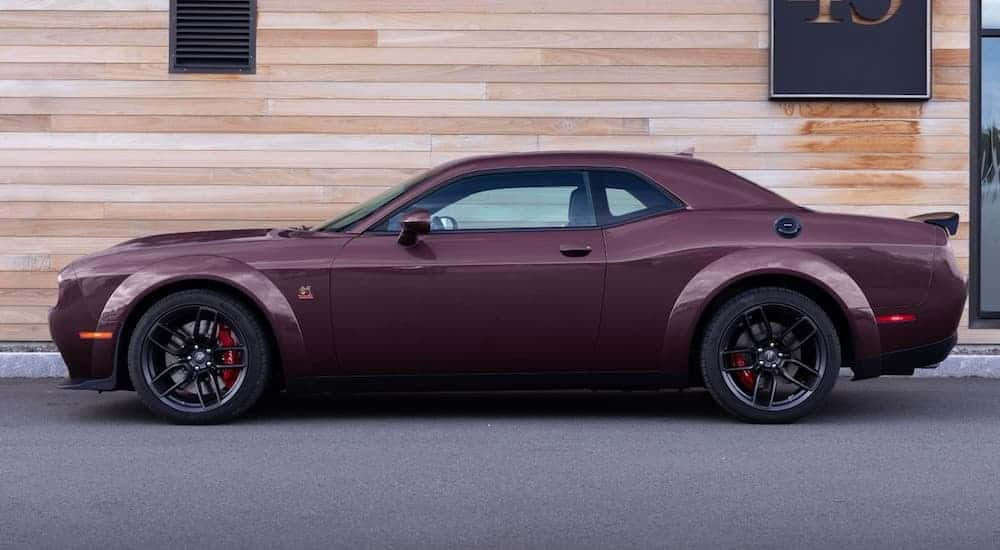
First released at the end of the 1960s, the Dodge Challenger has been a legendary part of the auto industry ever since, although there have been a few gaps in production. When Dodge brought the Challenger back again in 2008, we were elated; then it stuck around for another 15 years and created an incredible legacy of power and performance during that time. As you go looking for a used Dodge for sale, the Challenger is one of our favorite options to keep an eye out for since it has so much to offer. Finding the right one that you’ll love driving for many years isn’t always easy, however, so we thought we’d provide this simple guide to help you find a used Challenger that you’ll love driving day after day.
Know Your History: Understanding Generations and Model Years
No matter what used vehicle you’re interested in, we always recommend doing a bit of research to get to know the different options that you’ll find out there. The generations and model years are the perfect place to start, since this will guide many of your later decisions. Dodge introduced the Challenger for the 1970 model year as a pony car to compete with models like the Mercury Cougar and Pontiac Firebird; this generation ran through the 1974 model year. A second generation for the Challenger kicked off with the 1978 model year and ran through 1983, when it was discontinued again. Unless you’re a collector, you don’t need to worry about these models too much (although we won’t argue with the beauty of a first-gen Challenger). Instead, when looking at used models, you want to focus on 2008 and later, when the Challenger returned for a new third generation. This generation lasted through the 2023 model year, making it the longest and most popular run for this legendary car. Throughout this run, Dodge offered it as a two-door muscle car with impressive power under the hood and tremendous performance on the road. The 2015 model brought a number of changes, including a new eight-speed automatic transmission (replacing a five-speed automatic), enhanced power from its available 6.4-liter V8 engine, and upgrades to various features inside and out.

Power Under the Hood: Exploring Engine Options
With 15 different model years in its third generation, it’s worth taking some time to learn about the specifics of any particular year you find as you shop for a used model. Such a deep dive is beyond the scope of what we’re looking at today, but remember to pay attention to model years. You want to pay particular attention to the engine that you find because a number of different engines have been offered on third-generation models. What’s more, you can get different levels of performance from the engine you find, depending on the model year, which is why it’s so important to have a sense of how these things tie together. Looking at the 2009 Challenger, for example, several engines were available, starting with a 3.5-liter V6 that provides 250 hp. For some serious power, two different HEMI V8 engines were offered for the 2009 model: a 5.7-liter engine that delivers 370 hp and 398 lb-ft of torque, and a 6.1-liter monster that roars to life with 425 hp and 420 lb-ft of torque. You can find the 5.7-liter HEMI V8 engine with either the five-speed automatic we mentioned earlier or a six-speed manual transmission that actually boosts its power output to 375 hp and 404 lb-ft of torque. If you jump forward a decade or so, you’ll find five different engines on 2020 Challenger models, which perfectly highlights the big difference the model year makes. By 2020, a 3.6-liter Pentastar V6 engine became standard, with 303 hp and 268 lb-ft of torque. You can still find a 5.7-liter HEMI V8 engine, but it now provides 375 hp and 410 lb-ft of torque. There’s a 6.4-liter HEMI V8 with 485 hp, as well as a supercharged 6.2-liter Hellcat V8 engine with 717 hp, and a High Output version in Hellcat Redeye models that boosts performance to 807 hp. You can see how far Dodge’s engineers pushed the power output over the years, resulting in capabilities far beyond most other cars out there (even most other muscle cars).
Navigating the Options: Decoding Trim Levels
We’re just going to get this out of the way: the number of trims you can find on a used Dodge Challenger can be quite overwhelming. Some of this will vary depending on what model year you’re looking at, but you can find more than a dozen different models for the 2022 Challenger alone—although the differences between some of these trims are minimal, and many are minor special editions more than full trims.
SXT and GT
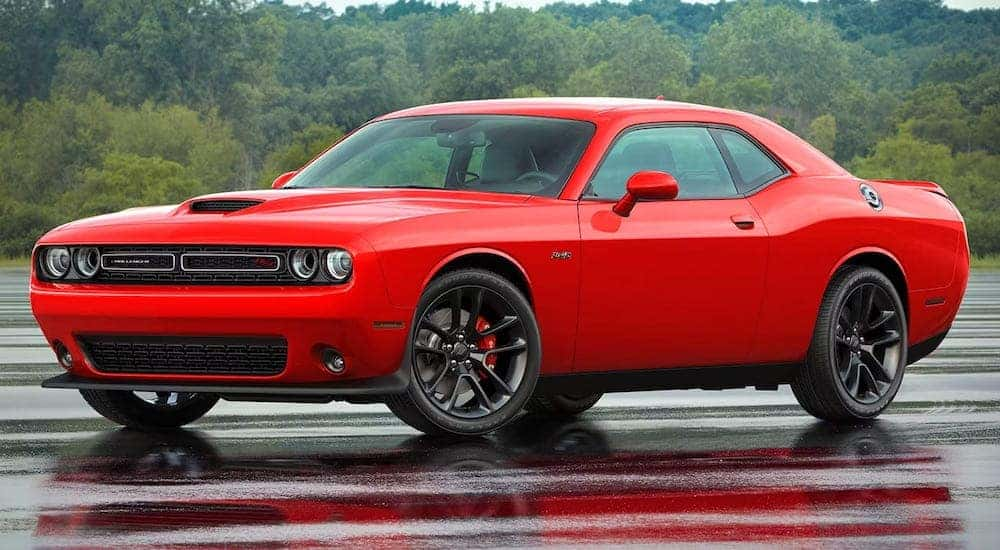
Still, even if you put that aside, you’ll find a lot of different trims, and there are some notable differences between them. When you look at Challenger models from the last few years of its third generation, the SXT is its starting point, so this trim gets you the standard features. From there, the GT has bigger wheels and can include more refined features—older GT models have all-wheel drive, but newer ones can have that or rear-wheel drive. The R/T trim is where to start if you want greater power: it comes with a 5.7-liter HEMI V8 rather than the standard V6.
R/T and SRT Hellcat
There are also numerous R/T packages and special editions available—this is where the trim lineup explodes—including the Shaker with its hood air intake, the Scat Pack with a more powerful 6.4-liter HEMI V8, and the Widebody models that feature wider fenders and larger tires. Moving beyond the R/T models, you’ll find the SRT Hellcat, which comes with the supercharged 6.2-liter HEMI V8 engine. This is also available in a number of editions, including a Widebody and an SRT Hellcat Redeye that features a 797-hp High Output engine.
Specialty Trims
Introduced in 2021, the SRT Super Stock model boosts that performance to 807 hp and comes with a number of extra features, like a dedicated track mode that lets you take full advantage of its incredible power. This was taken to the next level in 2023 with the SRT Demon 170, which boasts no less than 1,025 hp. We should also mention the SRT Jailbreak model, which was introduced in 2022 and had a lot more options available when sold as new, which means you can find many different versions of it out there.
Putting It All Together: Finding Your Dream Challenger
With all of these details in mind, now you can bring them all together to find the used Challenger you’ve been looking for. Start by considering which model year has the features you want—you’ll typically find late-year third-generation Challengers to be in the best shape. Then look for the engine you prefer, keeping in mind that the trim level can have a direct impact on the powertrain that you find. This makes it easier to get everything you’ve been looking for and a vehicle that is incredibly fun and rewarding to drive.
Drive Home Your Ideal Used Dodge Challenger Today
Again, we should mention that we have provided only a brief overview of what you need to look for and what you’ll find when shopping for a used Dodge Challenger. It can be tricky to check out different used models, compare the features they offer, and make sure you get what you want in your next car. That’s why it’s so important that you choose a dealership with a great selection of pre-owned vehicles and friendly people ready to work closely with you and help you get what you want. This is precisely what you’ll find here at Parks Chrysler Dodge Jeep Ram Gastonia, with our terrific inventory and incredible team that we’ve brought together. Whether you already have a particular used Challenger in mind or you’ve just started exploring what’s out there, we can help you find something you’ll love.